Call or Text: 718-756-8100 | Email: sales@alscientific.com


Laboratory & Medical Chillers
MRI - CT - X-ray - Ultrasound - Helium - Laser
All Scientific Tech provides specialized cooling solutions for medical imaging systems, ensuring stable operating temperatures, equipment reliability, and uninterrupted patient care. We are a preferred service vendor for chiller manufacturers including Haskris, Dimplex, Filtrine and KKT, as well as MRI / CT manufacturers such as Siemens, GE Healthcare, and Fujifilm.
UNDERSTANDING THE ENVIRONMENT
Laboratory & Medical Chillers
For critical laboratory and medical equipment to operate properly, it needs a reliable cooling system. A chiller cools fluids or air, keeping the machine at the right temperature. Without it, the equipment overheats and stops working, creating problems for both patients and doctors.
FIVE COMMON CHILLERS
Medical Imaging Machines That Need Chillers

01
MRI Chillers
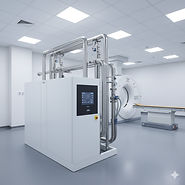
MRI machines use magnetic fields and radio waves to create detailed body images, but they generate a lot of heat. MRI chiller are used to cool the coldhead, an important mechanical component that recondenses helium gas back into a liquid after it has cooled the MRI magnet. This process prevents the helium from evaporating, keeps the magnet at the required temperature, helps avoid magnet quench. Replacing lost helium is very costly and directly affects patient care.
02
CT Chillers
CT scanners use X-rays to create 3D images and require a chiller to stay cool during long scans. Without cooling, they could overheat, stop working, or even cause burns.

03
X-ray Chillers
X-ray machines use electromagnetic radiation and need chillers to prevent overheating. These cooling systems keep the machines running safely and reduce risks to patients.

04
Ultrasound Chillers
Ultrasound machines create images using sound waves and also need chillers to stay cool. Without proper cooling, they wouldn't work efficiently, affecting patient care.

05
Helium Compressor Chillers
Nuclear medicine imaging machines use radioactive tracers and require chillers to prevent overheating and breakdowns, ensuring safe and effective operation.
Laboratory & Medical Chiller Refrigeration Cycle
Technical Refrigeration Cycle
The refrigeration cycle in laboratory and medical chillers uses a closed vapor‑compression loop to transfer heat away from temperature‑sensitive equipment. Starting at the compressor, refrigerant gas is pressurized and heated. It then releases heat in the condenser, becoming a high‑pressure liquid. Passing through the expansion valve, the liquid drops in pressure and temperature before entering the evaporator, where it absorbs heat and cools the target system. This cycle continuously repeats to maintain stable operating temperatures for medical imaging systems and other critical equipment.


MRI Chiller
How an MRI Chiller Refrigeration Cycle Works
An MRI chiller uses a vapor‑compression refrigeration cycle to remove heat from the MRI system and maintain safe operating temperatures for critical components. Refrigerant is compressed into a high‑pressure gas, then condensed into a liquid as it releases heat. After passing through an expansion valve to lower pressure and temperature, the refrigerant absorbs heat in the evaporator from the chilled water loop that cools the MRI equipment. The cycle repeats continuously to ensure stable performance and prevent overheating.
EXPERT CHILLER SOLUTIONS
Comprehensive Chiller Services
All Scientific Tech provides end-to-end expertise for laboratory and medical chillers. From precision installation and custom fabrication to preventive maintenance, repair, and both no-load and full-load startups, our services ensure optimal performance, reliability, and compliance for temperature sensitive equipment. Every service is executed with professionalism, technical precision, and a commitment to minimizing downtime.


